Last updated: November 05, 2026
Quick Answer: for How to Choose the Right Stair Lift for a Home with Curves or Landings, the right choice is usually a custom curved rail, not a standard straight rail, and the job is often decided by one or two turns, one intermediate landing, and the landing clearances at top and bottom. If your staircase has a turn, a landing, or a change in pitch, the rail has to follow that geometry closely so the chair moves safely and keeps enough clearance at the walls, banisters, and the top and bottom landings.
Key Takeaways
- A curved stair lift follows the stair path, not a single straight line.
- Curves, bends, and landings usually call for a custom rail.
- Good measuring tracks the full route, not just the opening.
- A landing break changes how the lift must transfer safely.
Choosing the right stair lift is less about picking a chair and more about matching the rail design to the staircase. For How to Choose the Right Stair Lift for a Home with Curves or Landings, that means the rail matters more than the seat. A straight rail works only on a straight run. Once the stairs turn, split, or pause at an intermediate landing, the lift may need a custom curved rail, a split rail system, or a different mounting strategy. That is the part many generic buying guides skip, and it is the part that decides whether a lift fits cleanly or becomes an awkward compromise.
What makes a curved stair lift different
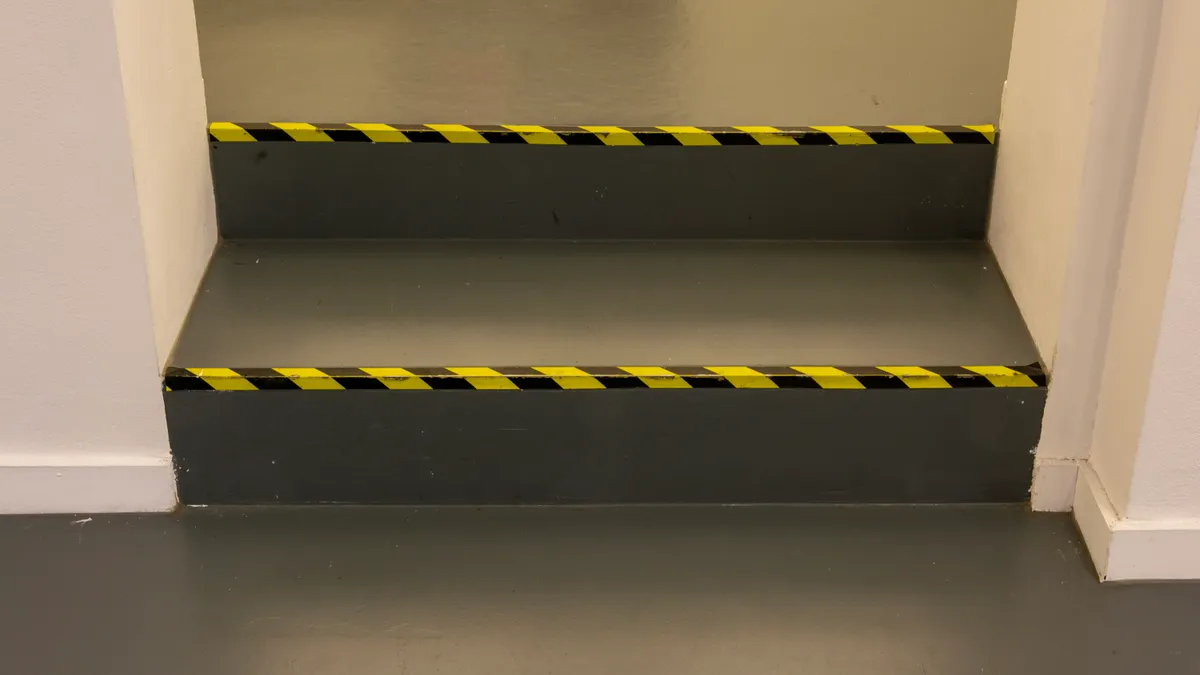
A curved stair lift follows the line of the stairs instead of running in one straight piece. That sounds obvious, but the difference matters because the rail is the main custom component, not the seat. On a straight staircase, manufacturers can use standard rail sections. On a staircase with a 90-degree turn, a spiral section, or an intermediate landing, the rail usually has to be measured and built for that exact path.
That custom work changes everything from lead time to cost to where the chair parks. It also changes how the lift handles transfer points at the top and bottom. A curved rail can hug the stair line closely, which helps preserve walking space on the stairs. A straight rail is simpler, cheaper, and often faster to install, but it only belongs on a straight run with no turn and no landing interruption.
One useful way to think about it is this: the lift chair may look similar across models, but the rail determines whether the lift belongs in your house at all. A curved stair lift is the right category when the staircase is not a single uninterrupted line. A straight rail is the right category when it is.
Manufacturers and installers often describe the job in terms of the staircase geometry first and the product second. That order is correct. If a person starts by shopping chairs, they can end up with the wrong rail family and a quote that does not apply to the actual stairs.
How do I know if I need a curved rail or a straight rail?
A curved rail is the right choice if the staircase turns, bends, or includes an intermediate landing that changes the direction of travel. A straight rail is right only when the stairs run in one uninterrupted line from bottom to top.
The easiest check is to walk the staircase with a tape measure and look at three things: whether the handrail turns, whether the treads continue without a landing break, and whether the chair would need to change direction anywhere on the climb. If the answer to any of those is yes, a straight rail usually stops being a fit.
A typical installation conversation will also involve the clearances at both ends. A straight rail often overhangs the top or bottom landing, while a curved rail can be designed to finish closer to the stair edge or to land at a very specific park position. That park position matters if the top landing is tight or if a door opens near the stairs.
The right way to measure a staircase with a turn or landing
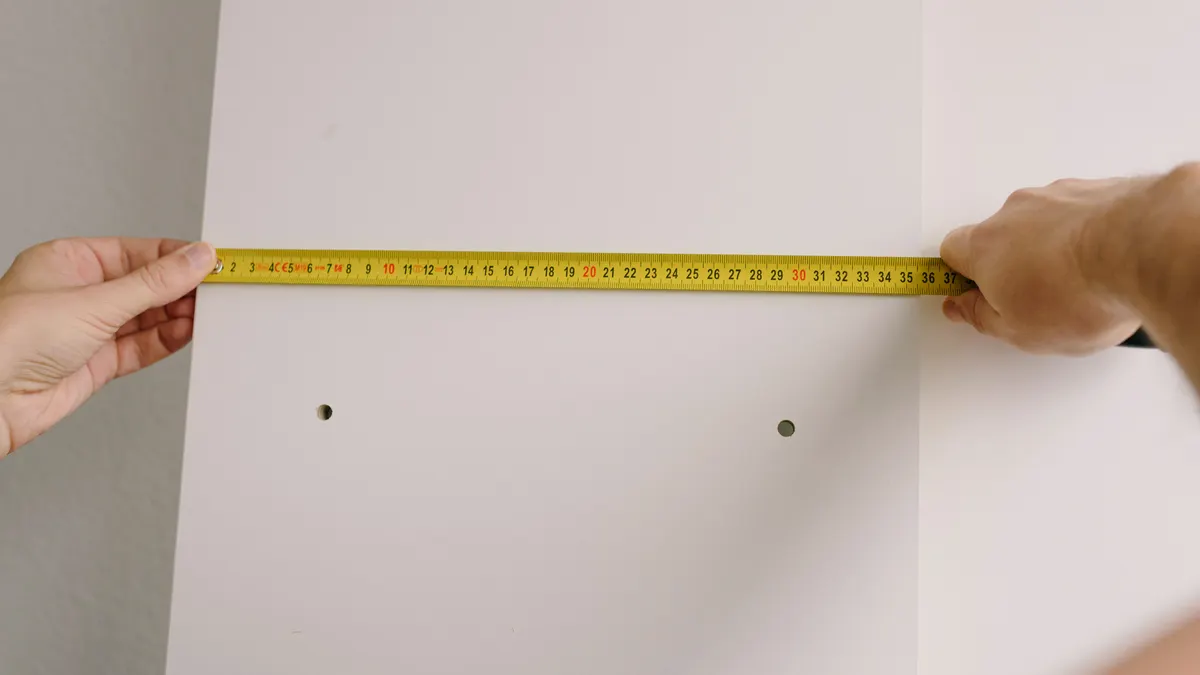
The right way to measure a curved staircase is to map the entire travel path, not just the floor opening. A curved stair lift quote depends on the shape of the rail, the stair width, the landing depth, and the exact place where the chair must stop at each end.
Use this approach before requesting a site survey:
- Measure the staircase width at the narrowest point with a tape measure. A common stair width is around 36 inches, but the exact clearance matters more than the average because the chair, rail, and footrest all need room.
- Mark the start and end of every turn, including any intermediate landing. This tells the installer where the rail must change direction or pause.
- Measure the tread run and the rise of several steps, then note any steps that are deeper, shorter, or uneven. A curved lift can accommodate variation, but the installer needs to know where it starts.
- Check the top landing and bottom landing for doors, thresholds, and walking paths. A lift that parks across a doorway is a problem even if the rail fits the stairs.
- Take photos from the bottom, middle, and top, including the wall side and the banister side. Good photos help confirm whether the rail can mount to the stairs, the wall, or a mix of both.
- Ask whether the lift will need a custom curved rail or a modular curved section. That one question determines whether the system is standard-order or made to the staircase.
A professional installer will usually do a final site survey before ordering a custom rail. That step is not a formality. A curved rail can be built to follow a tight bend, but once it is made, it is far less forgiving than a straight rail. A few inches of error can matter.
The practical result you want from measuring is enough information to prevent a rail that collides with the wall, blocks the stair edge, or leaves the chair stranded at the landing.
What the stair lift has to do at intermediate landings and turns
An intermediate landing changes the job because the lift has to manage a break in the stair path without creating a transfer hazard. On some homes, the rail can continue through the landing in one custom curved shape. On others, the landing creates a pause point or requires a split rail design that transitions across the bend.
This is where a lot of generic advice falls apart. A landing is not just extra floor space. It can be the place where the stair direction changes, the rail must clear a door swing, or the user needs a safe point to stop and resume. If the landing is narrow, a standard straight rail will not solve the layout. If the landing is generous, it still may require a custom rail profile so the chair does not swing into the wall at the turn.
The exact answer depends on the staircase. A 180-degree switchback is a different problem from a simple quarter-turn with a wide landing. A narrow middle landing on a split staircase can be the hardest case because the rail may need to hold tight to the edge while still leaving room for foot traffic.
When comparing options, ask where the chair parks at the top and bottom, how much rail overhang is needed, and whether the turn is handled in one continuous rail or in sections. The right answer is the one that lets a person ride through the turn without awkward repositioning. If the staircase cannot support that cleanly, the better choice may be a different stair lift design or a different accessibility solution.
Which model features matter more than the seat color?
The rail shape, power system, and mounting method matter more than cosmetic features. Seat color is the last thing I would use to decide on a curved stair lift, because the real fit issues are mechanical.
Start with the power supply. Most modern stair lifts use battery power with charging contacts at the top or bottom of the rail, so the chair can keep working during a power outage. That battery backup is not a luxury on a curved staircase; it matters because a custom rail often costs more and is expected to be a long-term installation. If the home loses power, a battery-backed lift gives the user a way to finish the ride instead of stopping mid-stair.
Then look at the seat swivel, folding footrest, and rail profile. A powered swivel can make transfers easier at the top landing, but it adds complexity. A manual swivel is simpler, but it may demand more trunk control from the user. A folding rail section can help at a doorway or narrow landing, but it is not always available on every curved system.
For indoor vs outdoor models, the distinction is not cosmetic either. Indoor models are built for conditioned spaces and dry stairs. Outdoor stair lifts use weather-resistant materials and covers because moisture, temperature swings, and debris change the maintenance load. If the staircase is covered but exposed, the outdoor version may still be the safer specification.
According to the U.S. Access Board, lift and accessibility standards are based on clearances, reach ranges, and safe use conditions, so terminology matters when you describe the staircase. The Stairway Lift Manufacturers Association also provides product information that helps compare lift types and features. For How to Choose the Right Stair Lift for a Home with Curves or Landings, those references help confirm the terms before you call an installer.
What should a buyer ask an installer before ordering?
A buyer should ask three things before ordering: whether the staircase needs a custom curved rail, how the lift will clear every landing, and what happens if the power goes out. Those questions expose the real design decisions in one conversation.
Use this short list when you request a quote:
- Is this staircase a straight rail job, a custom curved rail job, or a mixed layout with an intermediate landing?
- Where will the rail start and stop at the top and bottom?
- Will the chair clear the wall, banister, and any door on every turn?
- Is the lift battery-powered with charging points on the rail?
- Does the model work indoors, outdoors, or both?
- How much stair width is needed at the tightest point?
- Will the system require a wall mount, stair tread mount, or another special bracket pattern?
The answers matter because curved installations have less room for improvisation than straight ones. A straight rail can sometimes tolerate a little adjustment on site. A curved rail is closer to a made-to-measure part. If the installer cannot explain the route the chair will take through the bend, the quote is too vague.
This is also the moment to ask who the lift is for. A user who needs a very stable ride, a gentler seat transfer, or less twisting at the landing may benefit from one configuration over another. A person with more mobility may accept a simpler manual swivel and a tighter transfer point. The wrong configuration is not always the one that fails to work; sometimes it is the one that works, but makes daily use annoying.
Common mistakes that cost money or clearance
The most expensive mistake is assuming a curved staircase can take a straight rail with a few adjustments. That mistake can cost the buyer an unusable quote and wasted measurement visits. The fix is to identify the staircase geometry first, then ask for the rail type that matches it.
A second mistake is ignoring the top and bottom landings. A lift can fit the stairs and still fail at the landing because the chair blocks a doorway or the rail overhang cuts into walking space. The cost is usually a redesign or a rail reorder. The better move is to measure the parking points before the order is placed.
A third mistake is choosing on price alone. Curved rails are usually more specialized than straight rails, and the cheapest option may be cheap because it does not solve the difficult part of the staircase. That can mean a poor fit, more visible rail hardware, or a chair position that feels cramped at the turn. A better comparison looks at rail design, battery backup, landing clearance, and installation complexity together.
The last common mistake is forgetting whether the unit is indoor or outdoor rated. Outdoor models need weather-tougher construction; indoor models are not built for that exposure. If the stairs are in a screened porch, open side entry, or other semi-exposed area, this choice needs special attention. It is much easier to choose the right rating before installation than to replace a system later.
The best fit for curved stairs, and when it is not the best answer
The best stair lift for curved stairs is the one with a custom rail that matches the staircase exactly, leaves clear walking space on the landings, and uses battery backup so the lift still operates during a power loss. For a home with one turn or one intermediate landing, that usually means a made-to-measure curved rail rather than a straight rail adapted after the fact.
That said, a curved stair lift is not the right answer for every home. It is a poor fit when the staircase is extremely narrow, when the landing is too tight for safe parking, or when the user needs a very different transfer height than the staircase allows. In those cases, another accessibility option may fit the house better, even if it is less elegant on paper.
The practical decision is simple: choose a straight rail only for a straight run, choose a curved rail when the staircase turns or includes a landing break, and ask for a site survey before money changes hands. If the quote names a curved rail, an intermediate landing, and battery backup clearly, the buyer is usually in the right lane. If it stays vague, the installation is not ready yet.
For a broader look at how stair lifts fit into a home accessibility plan, the hub on home accessibility equipment for seniors is the right place to step back and compare categories before buying.
Drafted with AI; not yet reviewed by a person.