Last updated: October 24, 2026
Quick Answer: In a 10-minute home walk-through, fix the top 3 hazards first—stairs, loose floor coverings, and poor lighting—before buying gadgets. For How to Make a Home Safer for Seniors: A Room-by-Room Fall Prevention Guide, the quickest wins usually come from clearer paths, better light, and sturdier support—not major remodeling.
Start with the walking path. Make it clearer, brighter, and easier to grip before you spend money on gadgets. Home fall prevention works best when the biggest hazards go first: loose floor coverings, poor lighting, hard-to-see steps, and clutter that forces a quick turn or sidestep. Those small details can snowball fast.
A safer home usually does not come from one dramatic remodel. It comes from a sequence of small changes, done in the right order. Begin with the places that create the most trips and slips, then move room by room. Grab a good light, a notepad, and a helper if possible; one person notices the floor, the other notices reach and balance. For seniors, that first pass often takes 10 to 15 minutes. Twenty minutes, not two.
Start with a 10-minute home walk-through for senior fall prevention
The first step in How to Make a Home Safer for Seniors: A Room-by-Room Fall Prevention Guide is simple: walk through the home once, slowly, and mark every spot where a foot can catch, a hand cannot reach a support, or a surface feels slick. Use a notepad, painter’s tape, or your phone camera. Leave with a short list, not a pile of guesses.
- Walk the main path from bedroom to bathroom, kitchen, and front door in daytime and again at night with a lamp or flashlight. A good walk-through takes 10 to 15 minutes. You are looking for dim corners, tight turns, and anything that changes floor level without warning. That route tells the truth quickly.
- Look down for throw rugs, curled rug corners, loose mats, and cords crossing walkways. If the edge lifts even a little, it is a trip point.
- Look up and around for dark hallways, glare from a window, and switches that are not easy to find from the bed or doorway. Usually, the fix is a lamp, night light, or better switch placement—not more furniture.
- Check what the hand meets on stairs and at the front steps. A rail that wobbles or ends too soon is a problem, even if it looks fine from across the room. Looks can lie here.
- Mark the top three hazards first. Those are the ones that should be fixed before decorative changes, storage projects, or deep cleaning.
This step works when the house starts to read like a map instead of a mystery. If the list is longer than you expected, that is normal. A generic article often tells people to “declutter” and stops there; the better move is to identify the exact trip points and the exact route where a fall would hurt most. That order matters more than trying to change every room at once.
What should I fix first in a home fall prevention plan?
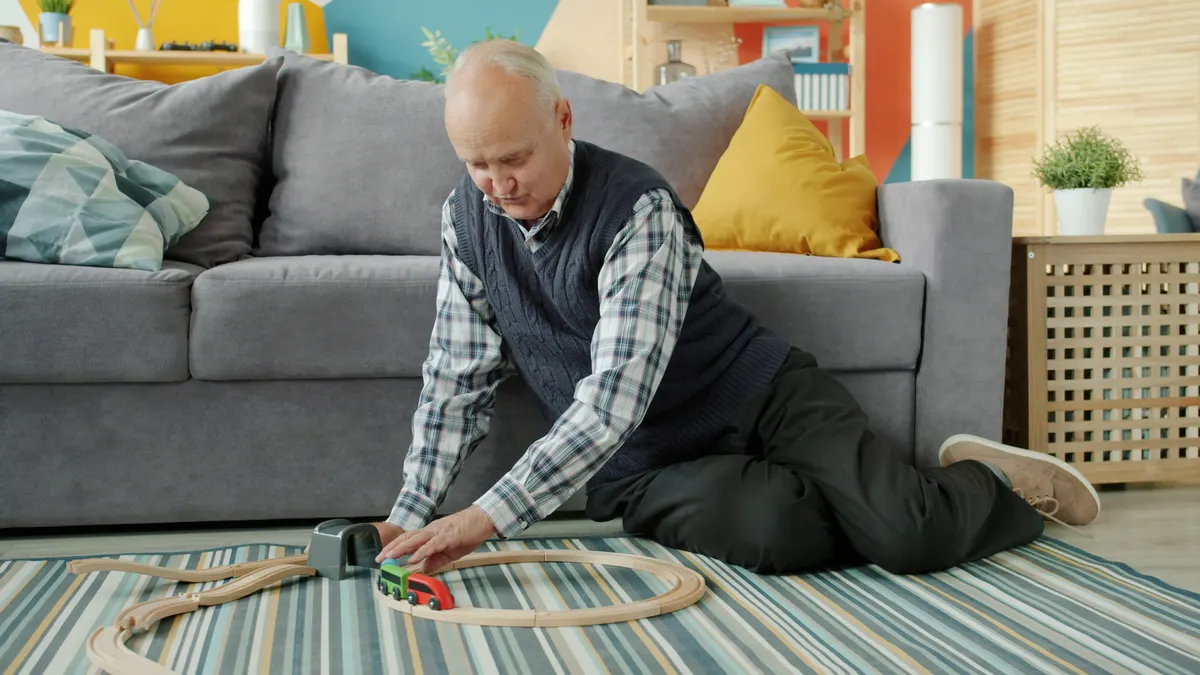
Fix the hazards that combine speed, height, and surprise first: stairs, entry steps, loose floor coverings, and dark travel paths. Those are the spots where one bad step can turn into a hard fall, so they should come before cosmetic repairs or storage projects.
A practical priority order is:
-
Stairs and steps. Add or tighten stair railings on both sides if possible. A single sturdy rail is better than none, but a second rail gives more options when balance is off. Railings should feel solid in the hand and run the full length of the stairs. If a stair edge blends into the floor, add high-contrast tread markers or nonslip stair treads made for indoor use.
-
Floor coverings. Remove throw rugs from walk paths entirely if they slide or curl. If a rug must stay, use a non-slip backing made for the rug and the floor below it. Tape that is not designed for flooring can leave residue or fail over time. A rug that moves even an inch is not a safe rug.
-
Lighting. Put night lights in bedrooms, halls, and the route to the bathroom. A plug-in night light or motion-sensor light is often enough to keep a person from walking in darkness at 2 a.m. Good lighting should reveal the floor edge before the foot reaches it.
-
Cords and charging cables. Route cords away from hallways and doorways, then secure them with cord covers where they must cross a path. A cord cover is not decoration; it is a low-profile shield that keeps a cable from becoming a loop underfoot. For a specific layout, a home safety professional can help choose the safest route.
-
Entryway clutter. Move shoes, umbrellas, packages, and pet gear out of the first step inside the door. The entry is a high-risk spot because people enter carrying something and looking up.
This order is not for every house in every situation. If the main issue is a frozen porch step, a broken railing, or a dark staircase, that hazard moves to the top immediately. The goal is not to make the home perfect; the goal is to make the most dangerous path safer first.
Make the entryway and stairs easier to cross
The entryway and stairs are where many homes punish small mistakes, so these areas deserve the most direct fixes. A front step, a threshold, or a narrow stair landing can become dangerous fast if it is dark, slick, or cluttered.
Start at the front door. Clear the landing so the first step inside is open and visible. If there is a threshold that catches shoes or mobility aids, add a small threshold ramp made for the height change. Choose a surface that stays put, not a loose mat that can slide when wet. If the entry floor gets slippery after rain, a textured, nonslip surface is better than a shiny finish.
On stairs, install or repair stair railings before anything else. The rail should be easy to grasp all the way up and down, not interrupted by a strange turn or decorative bracket. A common mistake is relying on one rail that feels fine for a younger adult but offers too little support for someone with weaker grip or slower reactions. If the staircase has poor contrast, use light-colored treads on dark stairs or dark tape on light stairs so each edge stands out.
The stair lights matter as much as the railings. A switch at both the top and bottom of the stairs is ideal, and a motion-sensor light can help in a hallway where the person may not remember to turn a lamp on. Good lighting should expose the full stair nose, not leave a shadow at the edge.
Do not place boxes, magazines, or decorative baskets on steps. Stairs are not storage, even for a short time. The cost of using them as shelves is a missed step. If the stairs are used daily and feel unsafe even after lighting and rail fixes, the home may need a larger accessibility plan rather than more small patches.
How do I deal with throw rugs, cords, and other floor hazards?
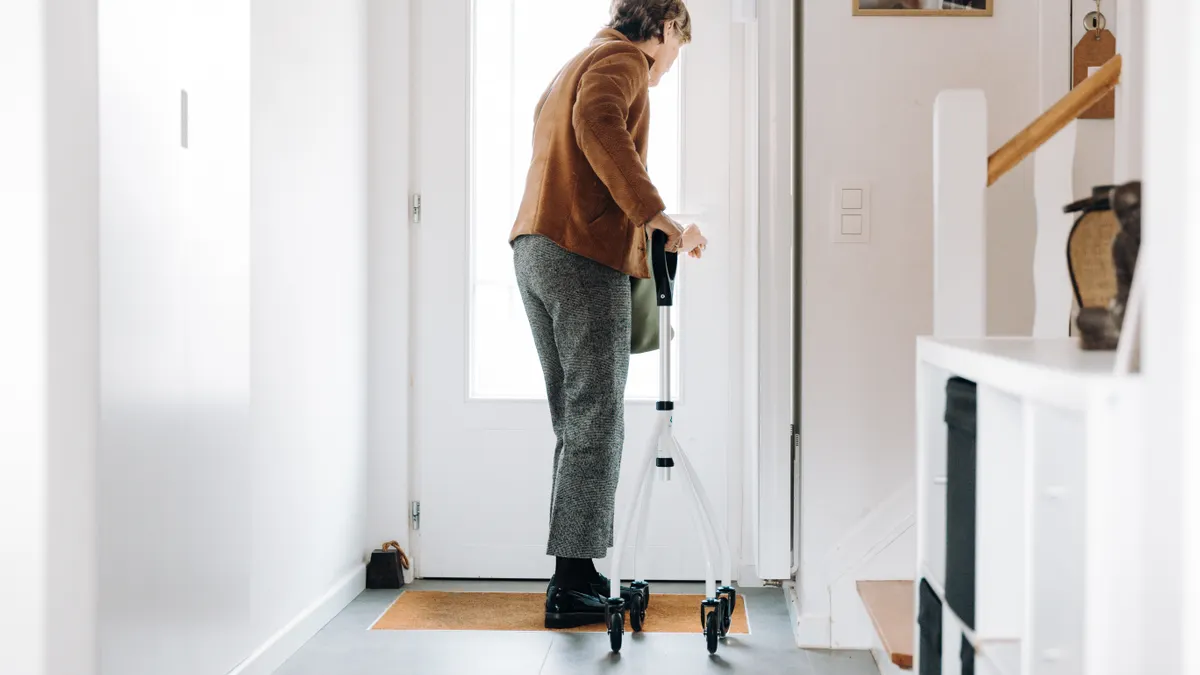
Remove or secure anything on the floor that can shift, curl, or hide the surface beneath it. The safest floor is usually the one that does not surprise a foot.
Throw rugs are a classic problem because they often look harmless and feel soft, but they move at the exact moment weight lands on the edge. If a rug is decorative rather than necessary, take it out. If it must stay, use a proper non-slip underlay that matches the floor type and keeps the rug flat. A rug that still creeps after that should come out.
Do the same with mats near sinks, doors, and beds. Bath mats belong to a different room and need different treatment, so this guide stays focused on the rest of the home. In living areas and bedrooms, the rule is simple: if a mat can slide, it should be replaced or removed. If you are unsure whether a mat is safe on a particular floor, consult a home safety professional.
Cord management is the next target. A power strip on the floor in a hallway is a problem even if no one notices it for months. Use cord covers where a cable must cross a route, shorten slack with clips or ties, and move furniture so cords can run behind it instead of across a path. If a charging cable is needed near a chair or bed, keep it aligned with the wall, not stretched across the space where feet land.
Pay attention to furniture legs and low shelves too. A table pushed into a walkway by 6 inches can force a narrow side-step at the wrong moment. Clear, wide routes are safer than tight routes with extra decor. A person should be able to walk from one room to another without threading around obstacles.
The trade-off is real: a cleaner floor can look less styled for a while. That is a smaller cost than a fall. Once the hazards are gone, add back only the items that do not move, curl, or block the route.
Use lighting to remove shadows, glare, and night-time risk
Better lighting reduces falls by making obstacles visible before a foot lands on them. The home does not need dramatic brightness everywhere; it needs the right light in the places people cross most often.
Use three kinds of light. First, ambient light for the room itself. Second, task light where someone reads, prepares food, or checks medication. Third, path lighting for hallways, stairs, and the route to the bathroom. A room with only one bright lamp can still hide a dark corner behind a chair.
Night lights matter because many falls happen during half-awake trips from bed to bathroom. Put them low enough to illuminate the floor, not just the wall. Motion-sensor night lights are useful in hallways because they turn on automatically without requiring a switch search in the dark. If a lamp switch is hard to reach from bed, add a lamp with a simple switch or use a device that is easy to activate without bending.
Watch for glare from glossy floors, polished tabletops, and windows in late afternoon. Glare can wash out contrast and make depth harder to judge. A simple curtain, blinds adjustment, or repositioned lamp can help more than a brighter bulb in the wrong place.
Do not over-light every room to the point of harsh shadows. The goal is even visibility, especially where the floor changes level or the person changes direction. A bright ceiling light that leaves a dark stair edge is not enough.
One honest limitation: lighting helps most when it matches the person’s habits. If someone routinely walks the same path at night, the lights should follow that path, not a designer layout. A generic ceiling fixture in the center of the room is often the least useful choice.
Which rooms need the most attention besides the bathroom in a home fall prevention guide?
After stairs and entryways, the bedroom, kitchen, and hallways usually need the most attention because they are crossed every day and often in a hurry. These rooms do not need a full remodel; they need cleaner paths, better reach zones, and fewer sudden movements.
In the bedroom, keep shoes, a phone, glasses, and a lamp within easy reach of the bed so there is less need to stand, twist, or search in the dark. The floor beside the bed should be clear enough for both feet to land without stepping over clothing or cords. If a person gets up often at night, a bedside light or motion light in the route out of the room matters more than extra décor. A tidy room helps, but the bed-to-door path matters most.
In the kitchen, place everyday items at waist to shoulder height so the person does not need a step stool or a deep bend. Heavy pans should live low enough to lift safely but not so low that the person has to crouch to the floor for daily use. Worn floor mats near the sink should be removed if they shift. Wet spots near the sink or refrigerator should be wiped immediately, because a slick kitchen floor can turn a quick turn into a fall.
Hallways should be wide and plain. No baskets, no chair arms sticking out into the path, no cords draped across the floor. If the hallway is narrow, the most reliable fix is removing items rather than trying to decorate around them. A walker or cane needs extra room too, so a hallway that looks “fine” to a younger person may still be too tight.
These rooms are where home fall prevention gets practical: less bending, less reaching, less guessing. A house can look less styled after these changes, but it becomes easier to move through, and that is the point.
What common mistakes make a safer home less safe?
The most common mistake is fixing the wrong problem first, which wastes time and leaves the real hazard in place. A decorative handrail, a brighter lamp in the wrong corner, or a stylish rug with no grip does not reduce risk if the route itself is still unsafe.
Another mistake is using temporary fixes as if they were permanent. Painter’s tape on a rug edge, a loose mat under a chair, or a cord tucked “for now” can become a trip point later. If a fix needs constant resetting, it is not doing the job.
A third mistake is filling the home with too many objects that create new hazards. A clearance sale ottoman, a decorative basket in the hall, or extra furniture at the foot of the bed can all force awkward steps. The layout often looks safer when it is spare. That can feel emotionally cold, especially in a longtime family home, but it leaves more room for stable movement.
One more mistake is assuming the same fix works for every person. Someone with low vision may need stronger contrast and lighting. Someone who uses a cane may need wider routes and firmer handholds. Someone recovering from a recent fall may need more than home changes alone. If there is a medical issue, medication effect, dizziness, or repeated falling, a clinician should be involved.
The honest position is this: a house can be made much safer without turning it into an institution, but a few items are not worth saving. A throw rug, a wobbly rail, and a dim stair are not charming if they are making the home harder to move through.
Key Takeaways
- Fix the highest-risk paths first: stairs, steps, entries, and night routes.
- Remove or secure anything that can shift underfoot, especially throw rugs and loose cords.
- Add light where the feet travel, not just where the eyes already look.
- Use stair railings, nonslip surfaces, and clear walkways before decorative changes.
- If falls keep happening or balance seems worse, bring in a clinician or home safety professional.
What are the most common fall hazards at home?
According to the CDC, falls are the leading cause of injury for adults 65 and older, with more than 14 million older adults reporting falls each year in the United States. The most common fall hazards at home are loose rugs, poor lighting, clutter in walkways, unsecured cords, and unsafe stairs or entry steps. These hazards matter because they create surprise, reduce reaction time, or remove support when a person needs it most. The fastest improvement usually comes from removing floor obstacles and improving visibility.
How can older adults reduce fall risk indoors?
Older adults can reduce fall risk indoors by keeping routes clear, using night lights, fixing stair railings, and making sure floors remain as flat and visible as possible. The CDC also advises discussing repeated falls or balance changes with a clinician, especially if dizziness, medication effects, or other health issues may be involved.
Drafted with AI; not yet reviewed by a person.