Last updated: October 31, 2026
Health monitoring and preventive screening are the easiest ways to catch disease before it becomes expensive, disabling, or irreversible. Quick Answer: for many adults, a preventive plan has about 3 to 5 core parts—blood pressure checks, guideline-based cancer screening, vaccine review, and targeted lab work—matched to age, sex, family history, symptoms, and risk factors. In the context of Health Monitoring and Preventive Screening: The Complete Guide, the value of checking for a condition usually depends on those factors, not on a blanket “screen everyone” approach.
The right plan is not a pile of annual tests. It is a matched set of blood pressure checks, cancer screening when indicated, vaccinations, and lab work chosen for a specific person at a specific age. That is why the U.S. Preventive Services Task Force, the CDC, and similar bodies keep publishing risk-based recommendations instead of one universal checklist.
This guide is for the person who wants a clear answer: what should be monitored, what should be screened, how often, what the trade-offs are, and when screening does more harm than good. It is also for the person who has been told to “get checked” but has never been told what that actually means.
What health monitoring and preventive screening actually cover
Health monitoring and preventive screening are not the same thing, and mixing them up leads to unnecessary tests. Monitoring means tracking a known measure over time, such as home blood pressure, A1c in diabetes, weight after a medication change, or cholesterol after a statin starts. Screening means looking for a condition before symptoms appear, such as cervical cancer screening or colon cancer screening in eligible adults.
That distinction matters because the evidence base is different. Monitoring is often about trend detection: is a number moving in the wrong direction over 3 months, 6 months, or a year? Screening is about finding hidden disease early enough to change the outcome. A blood pressure cuff used at home every morning is monitoring. A colonoscopy done at an age and interval recommended by a professional guideline is screening.
A lot of generic advice gets this wrong by treating every test as if it has the same purpose. If you are unsure whether a test is monitoring or screening, consult a clinician or other qualified professional; the answer depends on the person and the question being asked. A complete metabolic panel is not a “screening for everything” tool. A normal result does not guarantee future health, and an abnormal result does not always mean illness. In medicine, context drives interpretation.
The best screening programs usually share four traits: they target a common or high-impact condition, the test is reasonably accurate, treatment helps more when disease is found early, and the harms of false positives are acceptable. That last point is the one people forget. Screening can trigger anxiety, extra imaging, biopsies, and procedures that never needed to happen.
For a practical framework, the U.S. Preventive Services Task Force grades many preventive services by net benefit, and the CDC publishes adult vaccination guidance and screening-related prevention resources. The American Academy of Family Physicians also summarizes preventive care for primary care use. Those organizations do not recommend every possible test. That restraint is the point.
Which preventive screenings matter most by age and risk?
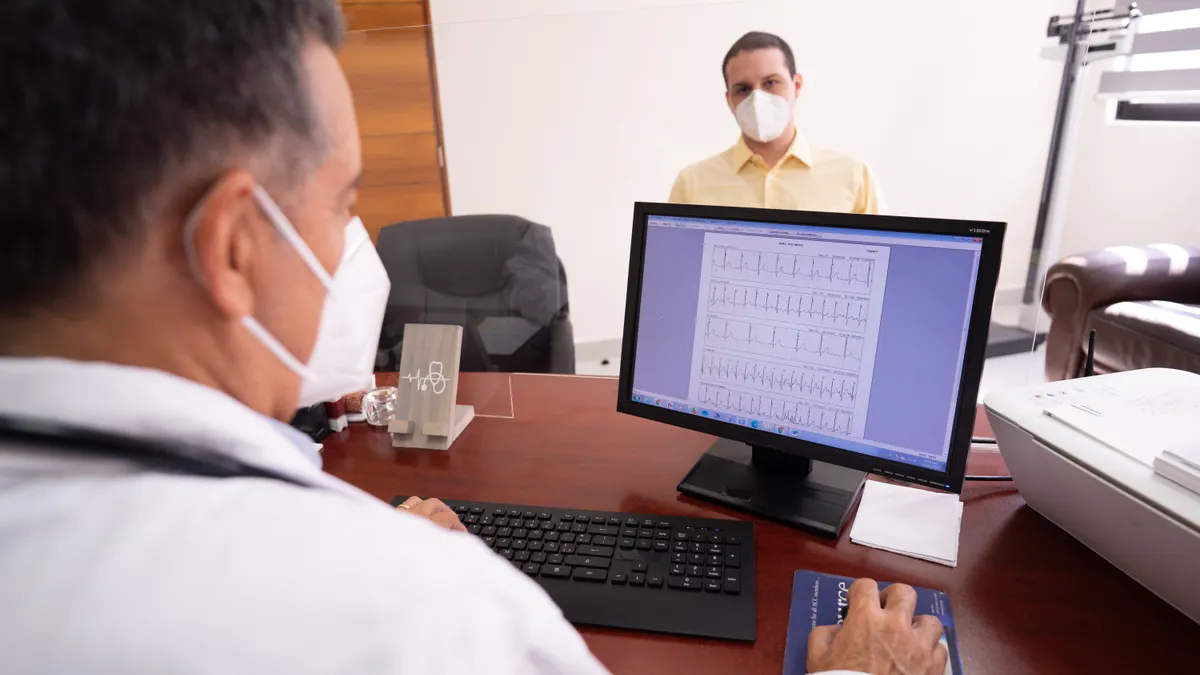
The most important preventive screenings depend on age, sex assigned at birth, family history, and risk factors, not on a universal annual panel. For a healthy adult in midlife, the highest-yield items are usually blood pressure, lipid evaluation, diabetes risk assessment when indicated, colorectal cancer screening at the recommended age, cervical cancer screening for people with a cervix, and lung cancer screening only for people who meet smoking-history criteria.
A common mistake is to ask for “all the screenings” at once. That approach creates overtesting and misses the reason screening exists in the first place: targeted prevention. A 28-year-old with no risk factors does not need the same workup as a 58-year-old smoker with hypertension and a family history of colon cancer.
Here is the practical way to think about it. Some screenings are broad because the conditions are common and the tests are low-risk. Blood pressure fits this category. Others are narrower because the test has real downsides or the disease is uncommon in low-risk people. PSA testing for prostate cancer is one example where shared decision-making matters because the balance of benefit and harm depends heavily on the individual.
One of the most useful external references is the USPSTF recommendation pages, which spell out age ranges and risk groups for services such as breast, cervical, colorectal, depression, hepatitis C, HIV, and lung cancer screening. The CDC’s adult immunization schedule is another anchor because vaccines are preventive care, too, even though people often forget to include them in “screening” conversations. For more detail on how those recommendations are framed, see the USPSTF recommendations and the CDC adult immunization schedule.
A real-world plan usually has layers:
- At every visit or at home: blood pressure, symptom review, medication review.
- At periodic intervals: cholesterol, diabetes risk review, skin or thyroid checks when clinically indicated.
- At age- and risk-based intervals: cancer screening, infectious disease screening, and vaccinations.
The right screening plan is not the one with the longest list. It is the one that matches a person’s actual risks and can be followed without confusion.
How often should you get checked?
How often you should get checked depends on the condition being monitored and how fast it can change. Blood pressure may be checked at every clinical visit or more often at home. Cholesterol and diabetes-related labs are usually spaced over months to years, while cancer screening intervals can range from every year to every 10 years depending on the test.
The interval matters because too-frequent testing adds cost and false alarms, while too-infrequent testing can miss an actionable change. A normal result does not create permanent protection. It is a snapshot. If the risk profile changes—weight gain, new smoking, pregnancy, menopause, a new family diagnosis, a new medication—an old normal test may no longer be enough.
A useful example is cervical cancer screening. The interval is not “every year forever.” The recommendation depends on age and the type of test used, because the biology of cervical disease and the performance of HPV-based testing support longer intervals for many people. That is very different from a home blood pressure log, where several readings over 1 to 2 weeks can be enough to reveal a pattern.
The same logic applies to colon cancer screening. A colonoscopy interval is not the same as a stool-based test interval. The appropriate schedule depends on which method is chosen and whether prior tests were normal. The interval is built into the screening strategy, not bolted on afterward.
There is a trade-off here that many articles skip: more frequent testing is not automatically safer. It can lead to incidental findings that trigger imaging, biopsies, and referrals. That is especially true when a test has a low pretest probability. Screening is most useful when the chance of benefit exceeds the chance of harm.
A practical rule: if the interval is not tied to a known risk factor, guideline, or prior result, the plan is probably too vague to be useful. Ask what is being followed, why that interval is chosen, and what action would change if the result changes.
What a good preventive screening plan includes
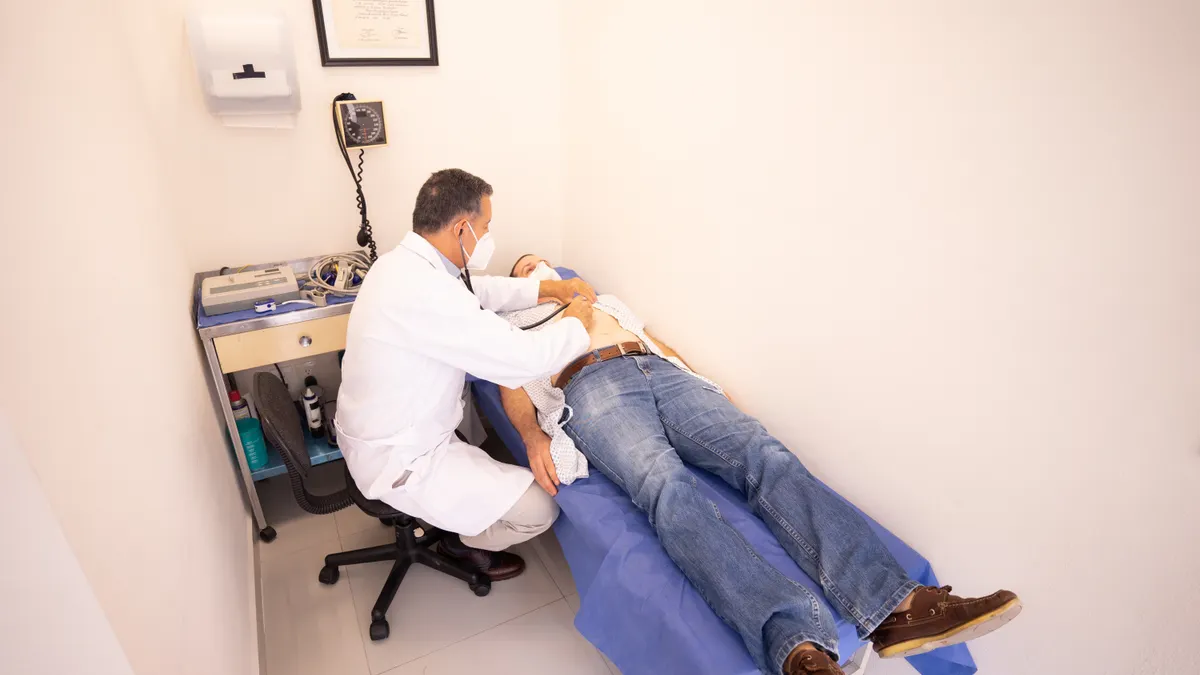
A good preventive screening plan includes blood pressure, weight or BMI when clinically useful, vaccination review, cancer screening that matches age and risk, and lab tests only when they answer a specific question. It also includes a plan for follow-up, because a test without an action step is just data.
The most overlooked part is the next step. A screening result should lead to something concrete: normal result and routine follow-up, borderline result and repeat testing, abnormal result and confirmatory testing, or treatment. If you are unsure what to do with a result, consult a clinician or other qualified professional before acting on it.
A good plan is also documented in plain language. For example, “Check home blood pressure 3 mornings per week for 2 weeks” is better than “monitor BP.” “Repeat A1c in 6 months if prediabetes is present” is better than “watch glucose.” Precision reduces missed follow-up.
This is where preventive care often breaks down in practice. People get one test from a specialist, another from a primary care visit, and a third from a workplace clinic, but nobody owns the schedule. The result is duplicate testing in one area and no testing in another. A good primary care clinician usually helps centralize that calendar.
The CDC’s vaccination schedule and the USPSTF recommendation lists are the cleanest starting points. For chest cancer risk from smoking, the USPSTF lung cancer screening page is especially useful because it states that screening is not for everyone with a smoking history, only for people who meet specific age and pack-year thresholds and are current smokers or have quit recently. See also the USPSTF lung cancer screening recommendation and the CDC adult immunization schedule.
The drawback of screening is not just false positives. It is also false reassurance. People often assume that a normal test means they can ignore symptoms. That is not how preventive screening works. A symptom still needs evaluation even if a screening test was normal 6 months ago.
What are the biggest mistakes people make with health monitoring?
The biggest mistakes are overtesting, misunderstanding risk, skipping follow-up, and treating one normal result as a lifetime clearance. If you are trying to avoid those mistakes, it helps to use a clinician-guided plan rather than a self-directed test list. These mistakes are common because preventive care feels reassuring, but reassurance is not the same as prevention.
Overtesting happens when people buy broad lab panels without a clinical question. A large panel can uncover mild abnormalities that never mattered and create a chain of repeat testing. It can also miss the condition that was actually relevant because the test order was generic rather than targeted.
Misunderstanding risk is just as common. A family history of disease does not mean the same thing for every person. The age of onset, degree of relation, and type of condition all matter. A parent with colon cancer at 78 is not the same risk signal as a sibling diagnosed at 42.
Skipping follow-up is the mistake that quietly cancels the benefit of screening. A test result only helps if someone sees it, understands it, and acts on it. That sounds obvious, but missed messages, moved addresses, and unopened portals are ordinary reasons screening fails in real life. If the result is unclear, ask a clinician or other qualified professional what the next step should be.
One honest limitation belongs here: some people are not good candidates for broad screening because their risk is low and the downside of chasing small abnormalities is high. That can be true for young adults with no symptoms and no family history. It can also be true for older adults with serious illness, where life expectancy and treatment tolerance change the calculus. In those cases, the right answer may be fewer tests, not more.
A practical example of a better approach is this: instead of ordering every conceivable blood test once a year, start with a problem list. Blood pressure risk? Check blood pressure. Smoking history? Consider lung cancer eligibility. Cervix present? Follow cervical screening guidance. Family history of early colon cancer? Ask about earlier colon screening. That is how preventive care becomes specific enough to matter.
When is screening a bad idea?
Screening is a bad idea when the test is likely to do more harm than good, when the person’s risk is too low, or when the result would not change management. That is not anti-prevention. It is part of good prevention.
False positives are the classic harm. A low-prevalence condition screened in a low-risk person can generate abnormal results that are not disease. Each abnormal result can lead to repeat labs, imaging, biopsies, and weeks of worry. Even when the final answer is “nothing serious,” the process still cost time and money.
Overdiagnosis is another harm. Some screening tests find abnormalities that would never have caused symptoms or shortened life. Once found, though, they are hard to ignore. The result is often treatment for a disease that would have stayed quiet.
Screening can also be a bad idea when it has no action path. If a person would not pursue treatment because of age, frailty, or preference, then the value of detecting the condition early may be low. That is why preventive care in older adults is often individualized.
Here is the practical trade-off: the same test can be sensible for one person and wasteful for another. PSA screening is the clearest example of this kind of judgment. So is some cancer screening in people with limited life expectancy. The question is not “Does the test exist?” The question is “Would this test change anything worth changing?”
A healthy skepticism is useful here. If a test is sold as “just being safe” but comes with no clear interval, no guideline, and no plan for abnormal results, it is probably not the screening the reader needs.
How to build a personal monitoring and screening plan
A personal monitoring and screening plan starts with risk, then assigns the right test to the right interval, and finally names who follows up the result. That sequence keeps the plan usable instead of aspirational.
Start by listing the facts that change screening:
- age,
- sex assigned at birth,
- smoking history,
- family history,
- pregnancy status,
- chronic conditions such as diabetes or hypertension,
- and current medications.
Then map those facts to the most relevant services. A person with high blood pressure needs a blood pressure monitoring plan. A person with diabetes needs glucose or A1c monitoring, eye screening, kidney checks, and foot assessment as clinically indicated. A person with a cervix needs cervical cancer screening at the interval recommended for age and prior results. A current or recent heavy smoker may qualify for lung cancer screening under USPSTF criteria.
The plan should also say where the records live. That can be a patient portal, a paper card, or a personal health app. The format matters less than consistency. Preventive care fails when no one can tell what was done last year.
A realistic plan is usually small. It should not look like a full-time job. For many adults, it is enough to have:
- a primary care visit at a regular interval,
- a short list of home measurements when needed,
- guideline-based cancer screening,
- and vaccines kept current.
Once that structure is in place, the main task is keeping it consistent over time. The reader should know what to do this month, what to repeat next year, and what result would trigger a change.
A common failure is to treat preventive screening like a single event. It is not. It is a system: measure, interpret, act, and repeat when appropriate. If that system is missing, even the best test loses much of its value.
A before-and-after view of preventive care choices
A before-and-after view helps show the difference between random testing and organized prevention. Before, the care plan is often vague, broad, and easy to forget. After, it is tied to a condition, a guideline, and a next step.
| Metric | Before | After | Change | Timeline |
|---|---|---|---|---|
| Blood pressure tracking | None or sporadic office checks | Home or office monitoring at a defined interval | More consistent detection of elevated readings | Ongoing |
| Cancer screening | “Get checked” without specifics | Screening matched to age, anatomy, and risk | Fewer missed or unnecessary tests | Interval-based |
| Lab testing | Broad annual panels | Targeted tests for a clear question | Less noise, more actionability | Every 6–12 months or as indicated |
| Follow-up | Unclear ownership | Named clinician or system review | Fewer missed abnormal results | After each test |
| Vaccination review | Ad hoc | Scheduled review of recommended vaccines | Better prevention of infection | At each preventive visit |
This table is intentionally simple because good preventive care is simple at the point of use. The complexity lives in the guidelines, not in the patient’s daily routine. The person should know what to do this month, what to repeat next year, and what result would trigger a change.
Key Takeaways
Preventive care works best when it is targeted, not exhaustive. The right plan uses monitoring for known risks, screening for hidden disease when early detection helps, and intervals that match real risk rather than habit. Overtesting can cause harm, while under-testing can miss disease that was still treatable. The safest approach is a personalized schedule, clear follow-up, and a willingness to skip tests that add noise without changing care.
FAQs
How do I know which screenings I actually need?
The answer depends on age, anatomy, family history, smoking history, and existing conditions. A primary care clinician can map those factors to guideline-based screening for blood pressure, lipids, diabetes risk, colorectal cancer, cervical cancer, lung cancer, and vaccines. The safest plan is the one tied to documented risk, not to a generic annual checklist.
Is annual full-body testing a good idea?
No, not as a default. A full-body panel often creates false alarms, duplicate work, and test results that do not change care. Most prevention is better done through targeted screening, routine blood pressure checks, vaccine review, and condition-specific labs ordered for a clear reason.
What is the difference between screening and diagnosis?
Screening looks for disease before symptoms appear; diagnosis evaluates a problem that already exists. A screening test can be normal even when symptoms need workup, and an abnormal screening test usually needs confirmatory testing before anyone calls it a diagnosis.
Drafted with AI; not yet reviewed by a person.