
Last updated: August 11, 2026
- For many readers, 5 to 10 minutes of targeted mobility plus 10 to 20 minutes of movement practice is enough to start seeing useful change.
- – A practical starter dose is 5 to 10 minutes of mobility and 10 to 20 minutes of movement work.
- Here is a practical way to think about it: Mobility block: 5 to 10 minutes on the specific limiter.
- Movement block: 10 to 20 minutes on the pattern you want.
Quick Answer: In mobility & movement — complete guide terms, the best starting point is usually the one that matches your limiter: when a joint cannot reach the position you need, begin with mobility; when you can reach it but cannot control it, begin with movement. For many readers, 5 to 10 minutes of targeted mobility plus 10 to 20 minutes of movement practice is enough to start seeing useful change.
Key Facts
– Mobility is usable joint range; movement is how you control and apply that range.
– When the joint cannot get there, mobility usually comes first.
– When the joint can get there but the pattern breaks down, movement practice usually comes first.
– Sharp pain, numbness, swelling, or sudden loss of function should be evaluated by a clinician.
– A practical starter dose is 5 to 10 minutes of mobility and 10 to 20 minutes of movement work.
– The goal is not more stretching; it is controlled, repeatable motion that helps your body do real tasks.
Mobility and movement are not the same thing, and that difference matters when your joints feel stiff, your workouts feel stuck, or your body simply does not move the way you want it to. In this mobility & movement — complete guide, my answer is plain: when you want to move better with less pain and less guesswork, start by improving mobility first, then build movement on top of it. My work covers training, rehab-adjacent exercise, and practical movement habits, and that perspective is why I care about the distinction.
Mobility is how much usable motion a joint gives you. Movement is how you use that motion in real life: walking, lifting, reaching, squatting, rotating, getting up and down from the floor, and staying strong while you do it. A person can be flexible and still move poorly. Strong? Still locked up. The goal is not “more stretching.” It is controlled, repeatable motion that helps your body do what you ask of it.
The Real Difference Between Mobility and Movement
Mobility wins when the problem is restriction; movement wins when the problem is coordination. That is the cleanest way I can put it, and it is the basic test I use in a mobility & movement — complete guide approach.
Stiff ankles, hips that refuse to rotate, shoulders that pinch overhead — all of that points toward mobility work, because the position itself is missing. But if you can reach those positions and then collapse, wobble, or lose tension once load shows up, movement practice is the fix. People mix these up constantly. They stretch a tight area, feel brief relief, then wonder why the same problem comes back. The missing piece is often motor control, strength, or just repeated exposure to the pattern they want to own.
I think of mobility as the raw material and movement as the finished product. Raw material without shaping does little. Shaping without raw material can’t go far either. A deep squat, for example, asks for ankle dorsiflexion, hip flexion, pelvic control, and trunk stability. You do not “stretch the squat” into existence. You earn it by improving the parts that limit it and practicing the pattern under control.
This is where generic advice usually falls flat. It treats the body as one tight blob, and that is not how the body works. Different joints have different jobs, according to the American Academy of Orthopaedic Surgeons and other clinical sources on range of motion and function.
- Ankles need to bend and support load.
- Hips need to rotate and absorb force.
- Thoracic spine needs to rotate and extend.
- Shoulders need to move freely while the rib cage and scapula stay organized.
Miss one link, and another area picks up the bill. That is how people end up with cranky knees, low backs, or shoulders that complain during press work.
For most readers, the practical question is not “Am I flexible?” It is “Can I get into the position I need, stay there, and produce force without compensation?” That is the question mobility and movement answer together.
Mobility & Movement: Who This Is Actually For
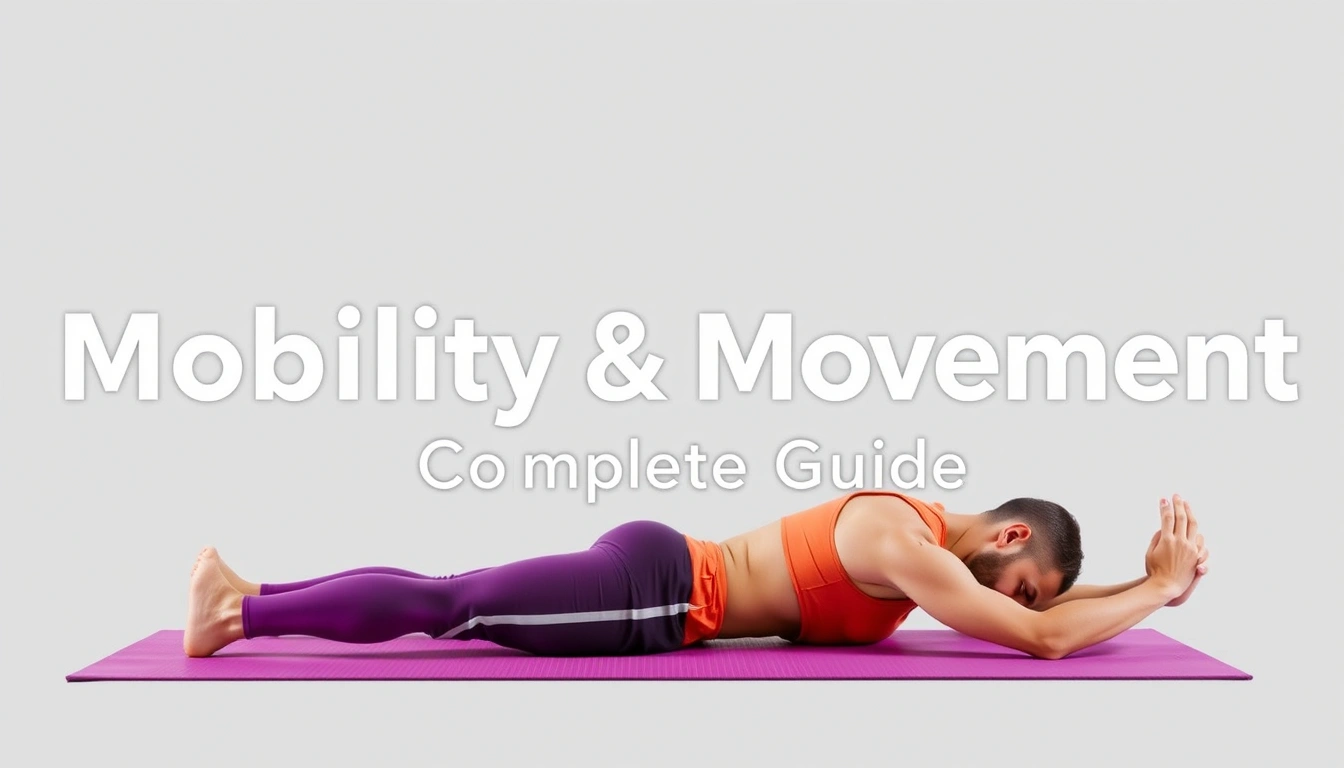
Mobility work is for the person who feels limited in basic positions, and movement training is for the person who wants those positions to hold up under load. If that sounds broad, it is because this topic affects more people than the fitness world likes to admit, which is why this mobility & movement — complete guide keeps both parts in view.
This guide is especially useful if you fit one of these profiles:
- You sit a lot and feel stiff getting up, squatting, or reaching overhead.
- You train regularly but keep hitting the same movement wall.
- You are coming back after a layoff and your body feels “rusty.”
- You want to keep lifting, running, climbing, or playing without fighting your joints.
- You have a recurring pattern: tight hips, limited ankles, painful shoulders, or a back that flares when you do “the same thing wrong,” and it is worth checking with a qualified professional if that pattern is persistent or worsening.
Who should not treat mobility as the main answer? Someone with sharp pain, numbness, swelling, or a sudden loss of function should not self-diagnose their way through a mobility routine; they should consult a clinician. The same goes for pain that worsens with load or lingers instead of easing as you warm up. Mobility can help a lot of ordinary stiffness; it is not a substitute for medical evaluation when the body is sending a louder signal, and the Cleveland Clinic and NHS both advise getting assessed when symptoms point beyond routine stiffness.
Honestly, the upside of mobility-first work is fast feedback. If a hip drill helps your squat immediately, you know where to look. If it does nothing, you may be chasing the wrong limiter. That saves time. The downside is less flattering: mobility can become a hobby. Some people keep collecting drills instead of building the strength and skill that make the new range useful.
One rule matters more than the rest: train the limitation you have, not the exercise you saw online.
The Honest Side-by-Side
Mobility is the better starting point when a joint refuses to access the position you need. Movement is the better answer when you can access the position but cannot use it well. The table below is the quickest way to separate them.
| Criteria | Mobility | Movement | Winner for [condition] |
|---|---|---|---|
| Primary goal | Increase usable joint range | Improve how you coordinate that range | Mobility for stiffness; Movement for control |
| Best use case | Limited squat depth, restricted overhead reach, stiff hips/ankles/shoulders | Wobble, compensation, poor force transfer, sloppy mechanics | Depends on the limiter |
| Speed of payoff | Can feel immediate, but often temporary | Usually slower, but tends to last longer | Mobility for quick relief; Movement for durable change |
| Risk of overdoing it | Chasing endless stretch without stability | Practicing bad patterns too hard or too often | Neither, if progressed well |
| Best tools | Controlled stretches, loaded end-range work, joint-specific drills | Squats, hinges, lunges, carries, crawling, rotation, gait drills | Mobility for range tools; Movement for skill tools |
| Where people fail | They stop after a stretch feels good | They jump to complex drills before they own basics | Movement fails more often from impatience |
| What it improves outside the gym | Getting down to the floor, reaching, turning, sitting and standing | Walking, lifting, carrying, climbing stairs, changing direction | Movement for daily life; Mobility for comfort inside it |
| When it is not enough | When weakness or poor control is the real issue | When a hard range limit blocks the pattern | Both, when the body needs range and control |
| Who should start here | Anyone who feels blocked in a specific joint | Anyone who can move but cannot repeat the pattern well | Mobility first if the joint is limited |
My take is blunt: when you only choose one lane, choose mobility first only when the joint truly will not give you the position. If you already have the position, spend your time on movement quality. Too many people reverse that order and wonder why they stay stuck.
Mobility & Movement: Who Should Actually Use Mobility First (and Who Shouldn’t)
Mobility first wins for the person who feels blocked at the joint itself. That is the group most likely to benefit from short, consistent work before strength training or sport practice, especially in a mobility & movement — complete guide framework.
I would put these people in the mobility-first bucket:
- Lifters whose ankles keep them from squatting with balance and depth.
- Desk-bound readers who cannot raise their arms overhead without rib flare or pinching.
- Runners whose hips feel like they never open fully.
- Older adults who notice the floor-to-stand transition getting harder, especially if that change is gradual and tied to stiffness.
- Anyone whose body “catches” in a familiar position but loosens after moving around for a while.
The strength of mobility work is specificity. If ankle motion is the limiter, you can target ankle motion. If the thoracic spine is stiff, you can work extension and rotation without turning the whole session into a random stretch festival. Done well, it can make positions feel cleaner almost immediately, which is why people like it. It also teaches the nervous system that the new range is safe enough to use.
But there is a catch. Many people mistake a better feeling for a solved problem. A stretched hip is not the same as a hip that can own the bottom of a lunge under load. Stop at the sensation, and the gain fades. Another flaw: some people keep stretching tissue that is not actually short. They need strength in range, not more range.
Who should skip mobility as the main event? People who are already quite mobile but unstable, especially if they fold, twist, or dump tension whenever the task gets harder. They often need loaded movement practice more than more passive stretching. Also, if a movement is painful in a sharp, reproducible way, blindly pushing end range is a bad idea. That is a point where a physical therapist or qualified clinician should guide the plan.
My opinion: mobility-first is a tool, not an identity. Use it to remove a clear block. Do not turn it into your whole program.
Movement Training: The Specific Situations Where It Wins
Movement training wins when the range is there but the body does not know what to do with it. That is the most common blind spot I see in casual fitness advice, and it matters a lot in any mobility & movement — complete guide.
If you can squat deep in a warm-up stretch but your knees cave, your chest drops, or your heels lift when the set gets hard, your problem is not just mobility. It is movement under demand. Same with overhead work: if you can stand with your arms up but your rib cage flares and your lower back arches, you have coordination issues that mobility drills alone will not fix.
Movement training is the better fit for:
- Relearning basic patterns after a break.
- Building strength in positions you already own.
- Improving gait, balance, and coordination.
- Making gym work carry over to daily life.
- Cleaning up compensation patterns that repeat under fatigue.
The real strength here is durability. Movement work teaches your body to repeat the same task without falling apart. Carries, hinges, squats, lunges, crawls, step-ups, push-ups, rows, and rotational patterns all expose weak links. They tell you where the body leaks force. That matters more than range for a lot of people.
The weakness is plain enough: movement work can become sloppier than people admit. Rush the reps, copy a variation that is too advanced, or turn every drill into cardio, and you can rehearse bad mechanics faster than you fix them. It also fails when someone uses it to dodge the mobility work they clearly need. Strong movement on a blocked joint is still blocked movement.
I would choose movement training when the phrase “I can get there, I just can’t control it” sounds like you. That sentence is the giveaway. When control is the issue, start there.
How I Would Combine Mobility and Movement in Real Life
I would not separate mobility and movement as if they were rival camps. I would sequence them, because that is usually how a mobility & movement — complete guide works best in practice.
The cleanest order is:
- Open the joint or pattern you cannot access.
- Groove the movement you want.
- Load it enough to make it stick.
A simple example: if deep squats feel ugly because your ankles are stiff, I would start with ankle-focused mobility, then squat variations that keep the heel down and torso organized, then add load once position stays steady. Not every session needs all three, but that sequence keeps the plan honest.
Here is a practical way to think about it:
- Mobility block: 5 to 10 minutes on the specific limiter.
- Movement block: 10 to 20 minutes on the pattern you want.
- Strength or skill block: 10 to 30 minutes loading the pattern in a tolerable range.
That structure works because it respects the order of adaptation. Range comes first if range is missing. Patterning comes next if the pattern is messy. Load comes last if the body can now repeat the movement without losing shape.
I like this approach more than a giant full-body circuit of random drills because it forces a decision. What is the limiter today? What pattern needs attention? What should be loaded, and what should be left alone?
The big mistake is trying to fix everything at once. When everything is treated as a mobility problem, the routine gets bloated and unfocused, so a clinician or experienced coach can help you sort out whether the real issue is range, control, or load management. When everything is treated as a strength problem, the body keeps hitting the same brick wall, which is another case where a professional assessment can save time. The answer is usually a blend, but not an equal blend.
A useful self-check: if you feel better after the warm-up but the problem returns under load, you probably need more movement work. If you still cannot reach the position after warming up, you probably need more mobility or a better diagnosis of the blocker.
The Honest Side-By-Side: What a Generic Article Gets Wrong
A generic article usually says “mobility is flexibility” and moves on. That misses the part that actually changes outcomes: active control in useful positions. Flexibility alone does not guarantee clean movement. Neither does “functional training” if the joint never gets a chance to move where it needs to go.
The other common mistake is giving the same prescription to everyone. A runner with stiff calves, a lifter with cranky shoulders, and a parent whose main issue is getting off the floor do not need the same drill menu. They need a reasoned sequence based on the limiter in front of them.
A third problem is pretending more is always better, when the real question is whether the added work matches the limitation. More stretching can irritate a joint. More movement volume can reinforce poor mechanics. Progress is not about collecting exercises. It is about matching the tool to the limit.
If you want a better filter, ask these three questions:
- Is the joint actually limited?
- Can I control the range I already have?
- Does the movement improve when I add load, reduce speed, or simplify the pattern?
If the answer to the first question is yes, mobility earns attention. If the second is no, movement practice earns attention. If the third is no, the exercise may be too advanced, too fatiguing, or simply the wrong choice.
Our Verdict: Which One to Choose and Why
Choose mobility if a specific joint will not get into the position you need and the problem improves when you warm up, change position, or use targeted drills. Choose movement if you can reach the position but lose control, shape, or strength as soon as the task gets real. Neither if you have sharp pain, swelling, numbness, or a sudden loss of function that needs medical evaluation.
That is my call.
If you ask me where most people should start, I would say mobility first only when there is a clear mechanical block. Otherwise, movement wins because it teaches the body to use what it already has. Range without control is unstable. Control without range is cramped. The best answer is usually both, but the first move should follow the limiter, not the trend.
For a reader trying to decide in one sentence: mobility removes the ceiling, movement teaches you to live under it.
When to Reconsider This Choice Entirely
There are a few situations where the mobility-versus-movement debate is the wrong debate.
First, if pain is sharp, escalating, or paired with swelling, numbness, or loss of strength, stop trying to self-correct with drills. That belongs in a clinician’s office, not a warm-up, and the NHS advises prompt assessment when symptoms are sudden or severe.
Second, if your issue is fatigue, sleep, or overall recovery, a mobility routine will not save you. Stiffness can be a symptom of being under-recovered. Sometimes the answer is less training stress, better sleep, or more time between hard sessions.
Third, if you keep “fixing” the same spot forever, consider that the real issue may be elsewhere. A tight hip can be compensating for a weak foot, poor trunk control, or a movement pattern you repeat badly all day. Local symptoms often come from a global problem.
Fourth, if your goal is performance rather than relief, do not spend all your time on opening positions.
