Last updated: August 11, 2026
Rusty joints can make the first steps of the day feel like hard work. This stretching routine for seniors is meant for that exact moment, before breakfast, when everything seems a bit creaky. Quick answer: 5 to 10 minutes of gentle morning flexibility exercises for stiff joints is enough for many people to feel looser, warmer, and steadier. I write about senior fitness and joint-friendly movement, and my answer is simple: begin with pain-free motions that wake up your neck, shoulders, spine, hips, knees, and ankles without forcing range. Easy does it.
Key facts
- 5 to 10 minutes is a practical morning target for many seniors.
- Gentle reps usually make more sense than long holds first thing in the morning.
- Motion before intensity is the safer opening move when joints feel cold.
- Chair-based mobility work can be a simple way to start the day.
- Stop if pain increases sharply, balance feels off, or dizziness starts.
What a Good Morning Stretching Routine for Seniors Actually Does
A useful morning routine has three jobs: it loosens tissue that tightened overnight, it brings blood flow back to sleepy muscles, and it reminds your balance system that you are upright again. This matters more than touching your toes or chasing a deep stretch. Really.
I would choose movement over long holds for stiff joints. Gentle reps usually make more sense in the morning than aggressive stretching because cold joints dislike sudden force; that much is plain. The goal is to feel easier after five to ten minutes, not “worked out.”
This is where a lot of generic advice goes sideways. Stiffness is not the same thing as tightness. A joint can feel stiff because it sat still for hours, because the muscles around it are weak, because arthritis is flaring, or because you slept in one position too long. So the routine should be calm and repeatable, not dramatic.
Honestly, there is a trade-off here. Stretching can help you feel looser, but it will not fix severe pain, swelling, numbness, or a joint that truly locks. When a movement increases pain sharply, stops you from bearing weight, or makes you dizzy, stop and ask a clinician. For persistent joint symptoms, a physical therapist or other qualified health professional can help you sort out what is safe.
For authoritative guidance on staying active with arthritis and joint pain, I’d point you to the National Institute on Aging and the Arthritis Foundation:
– National Institute on Aging: https://www.nia.nih.gov/health/exercise-physical-activity-and-older-adults
– Arthritis Foundation: https://www.arthritis.org/health-wellness/healthy-living/physical-activity
For related guidance, see our pages on chair exercises for seniors, balance exercises for older adults, and arthritis pain relief tips.
The Real Difference Between Static Stretching and Gentle Mobility Work

Gentle mobility work wins first for stiff morning joints. Static stretching has a place, but I would not make it the opening move for most seniors.
Static stretching means holding a muscle in one position for a set time. That can help later during the day, after your body is warm, or for a muscle that always feels short. But a long hold can feel too intense first thing in the morning, especially if you live with arthritis, osteoporosis concerns, or balance problems. And yes, people do sometimes push too hard because the stretch sensation tricks them into thinking faster is better.
Gentle mobility work uses repeated, controlled motion: ankle circles, shoulder rolls, seated marching, neck turns, and slow knee bends. Small? Sure. Still useful. These moves tell the joint it is safe to move and help the body wake up without provoking it.
If you only remember one thing, remember this: in the morning, motion before intensity. Static stretching comes second.
The honest drawback is that mobility work can feel almost too easy. People skip it because it does not burn or look athletic. That is exactly why it helps many older adults. It lowers the barrier to starting, and starting is the win.
The Morning Routine: A Safe Sequence for Stiff Joints
I would use this order because it moves from easiest joints to more demanding ones. Keep the whole routine gentle and breathe normally. No rushing.
1) Breathing and posture reset
Sit on the edge of the bed or in a sturdy chair. Let your hands rest on your thighs. Take several slow breaths and sit a little taller on the exhale. This is not just relaxation; it helps you stop guarding tense muscles.
2) Neck turns and nods
Turn your head slowly left and right as if checking over each shoulder. Then nod slightly up and down. Keep the range small. Should pinching show up, shorten the motion.
3) Shoulder rolls and arm circles
Roll both shoulders forward and back. Then make small circles with your arms, first one at a time if balance feels shaky, then together if that feels easy. This is a good choice for people whose upper back feels stiff when they first get out of bed.
4) Seated spine twist
While sitting tall, gently rotate your upper body a little to one side, then the other. Keep hips facing forward. This should feel like a soft rotation, not a wrench.
5) Seated march
Lift one knee, then the other, like marching in place. This wakes up hip flexors and gets the lower body ready for standing. If lifting high is hard, just unweight the foot and tap it down.
6) Knee extension
Straighten one leg, then the other, as if showing the sole of your shoe. This can be especially helpful if knees feel sticky after sleep.
7) Ankle circles and toe pumps
Circle each ankle and then point and flex the toes. I like ending here because ankles are easy to ignore until they feel stiff on the first steps of the day.
8) Sit-to-stand practice if you are steady enough
If you can rise from a chair safely, do a few slow sit-to-stands with your hands on the armrests or thighs. This is not a stretch in the strict sense, but it is a useful morning “unfreezing” move for older adults because it links mobility and strength.
A good routine should leave you feeling warmer, not strained. If any joint feels worse afterward, scale back the range or skip that movement. Simple.
Morning Flexibility Exercises for Stiff Joints: My Best Picks by Body Area
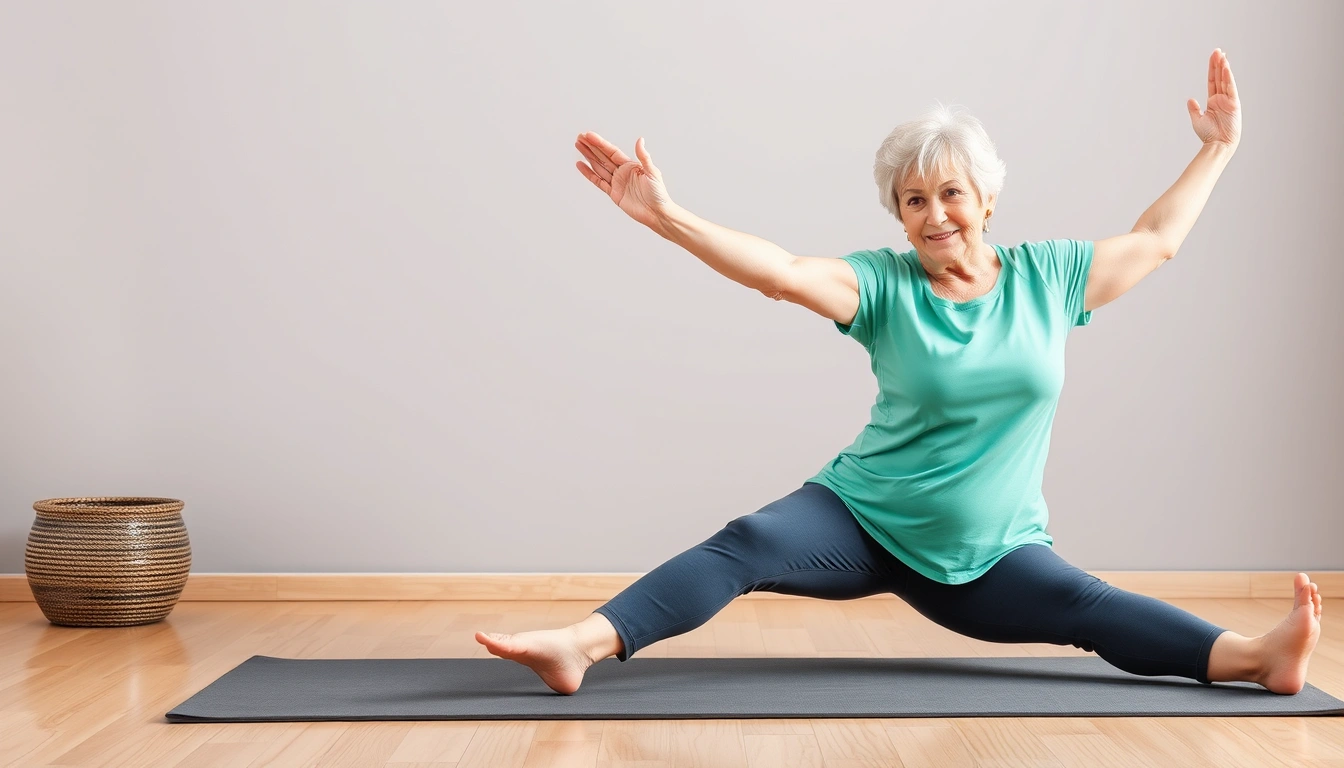
A lot of articles get fuzzy here. I want to be specific about what helps which area.
For the neck and shoulders, small circles and gentle turns usually beat hard stretching. Morning neck stiffness often responds best to motion that stays under your pain threshold. Don’t force your head down toward your chest if that causes pressure.
For the upper back, seated twists and shoulder blade squeezes are useful because the upper spine stiffens with long periods of stillness. I would favor these over trying to “crack” the back or twist hard.
For hips, seated marching and standing hip circles are practical because hips often feel tight when the surrounding muscles have been inactive. If you have balance concerns, hold a counter or chair back. A small movement done safely is better than a large movement done while bracing.
For knees, slow bends, leg extensions, and gentle heel slides are the right tools. Knees usually like controlled motion more than deep stretching. If you have arthritis, a knee that warms up after a few repetitions is a good sign; sharp pain or swelling is not.
For ankles and feet, circles, toe pumps, and heel raises are worth doing every morning. They may look simple, but they help with the first steps out of bed and can make the walk to the kitchen feel smoother. Chalk and cheese, really.
My rule of thumb: if a joint carries your weight, start with tiny range and build only if the joint feels calmer after several reps.
The Honest Side-by-Side: Morning Stretching vs. Waiting Until Later
| Criteria | Morning Stretching Routine | Later-in-the-Day Stretching | Winner for [condition] |
|---|---|---|---|
| Best use | Wakes up stiff joints and reduces morning “rust” | Works better after the body is already warm | Morning: stiffness on waking |
| Intensity | Should stay gentle and controlled | Can tolerate slightly deeper holds for some people | Morning: sensitive joints |
| Balance demand | Can be done seated or with support | More options for standing work | Morning: fall-risk concerns |
| Consistency | Easier to attach to a daily wake-up habit | Competes with errands, fatigue, and interruptions | Morning: routine builders |
| Pain tolerance | Lower tolerance; cold joints dislike force | Often more forgiving after movement | Later: people who want deeper work |
| Time to benefit | Can improve first steps and sitting-to-standing | May help general flexibility but not the first hour of the day | Morning: first-hour stiffness |
| Risk of overdoing it | Higher if you push range too fast | Lower once muscles are warm | Later: people who like longer holds |
| Best format | Seated mobility and short holds | Static stretches or a longer full-body routine | Morning: people with stiff, sleepy joints |
My take is straightforward: morning wins for getting moving, later wins for deeper stretching. If the question is “How do I feel less creaky before I start my day?” then morning mobility is the better tool.
The Honesty Check: Who Should Use This Routine and Who Shouldn’t
This routine works for seniors who wake up stiff but can move safely with support. That includes people with mild to moderate joint stiffness, older adults who sit a lot, and anyone who wants a short, low-friction start to the day.
It also suits people who dislike exercise but will tolerate a routine that feels more like “greasing the hinges” than “working out.” I would especially recommend it to readers who know they feel worse after being still for a while and better after a few minutes of movement.
The weakness matters too: when your mornings include severe joint pain, significant swelling, repeated falls, new numbness, or a recent injury, this should not be your only plan. You may need medical evaluation first. The routine can also fall short for someone who needs more strength work than flexibility work. If your legs feel unsteady, mobility alone will not solve that.
People with severe osteoporosis, advanced balance issues, or joint replacements should get individualized guidance from a clinician or physical therapist before trying a new routine. That is not me being cautious for the sake of it; it is the difference between a useful habit and a risky one. Fair trade-off.
The Specific Situations Where This Routine Wins
This routine is best when the problem is morning stiffness, not athletic flexibility. It wins if you get out of bed and feel your back, hips, knees, or ankles need a minute to “come online.”
It also wins for people who need a routine they can actually repeat. Short, seated, low-pressure movements are more likely to become a habit than a perfect 20-minute sequence that feels too ambitious before coffee.
I would also choose this approach for caregivers or spouses helping a senior get moving. It is easy to supervise, easy to modify, and easy to stop if something feels off. The safety margin is one of its real strengths.
The drawback is plain: it is not a complete fitness plan. It will not build much strength, it will not train endurance, and it will not correct every cause of stiffness. If the body is stiff because it is weak, immobile, and underused, flexibility work is only one piece.
Our Verdict: Which One to Choose and Why
Choose morning gentle mobility if your main problem is waking up stiff, you want a short routine, and you need something safe enough to do in a chair. Choose later-in-the-day stretching if you already move around a bit before stretching and want deeper holds after your body is warm. Neither if you have severe pain, swelling, numbness, unexplained weakness, or a recent injury that needs medical assessment first.
That is my call. For most seniors with stiff joints, morning mobility is the better starting point because it is easier to do consistently and safer when the body is cold.
When to Reconsider This Choice Entirely
There are a few exception scenarios where I would flip the recommendation or pause the routine altogether.
When stretching makes one joint feel sharply worse every morning, stop trying to “work through” it. That pattern can mean something more than simple stiffness.
When you feel dizzy as you sit up, stand, or turn your head, prioritize safety and speak with a clinician before adding movement. Morning lightheadedness changes the picture.
If your biggest problem is weakness rather than stiffness, I would shift some attention from stretching to basic strength work, because weak muscles can make joints feel stiff and unstable.
If your routine requires you to hold onto furniture to avoid falling, simplify it further or do it fully seated until balance improves.
FAQ
How long should a morning stretching routine take?
I would aim for five to ten minutes. That is usually enough to reduce stiffness without turning the routine into a chore.
Should seniors stretch to the point of pain?
No. A mild stretching sensation is one thing; pain is another. Pain means back off, shorten the range, or skip the move.
Is it better to stretch before or after walking?
For stiff joints, a little mobility work before walking usually helps the first steps feel easier. If you already feel loose after a short walk, a deeper stretch can wait until afterward.
Can chair exercises count as stretching?
Yes. For many seniors, chair-based mobility work is a practical and often safer way to start the day.
What if my joints are stiff every morning?
If the stiffness is frequent, worsening, or lasts a long time after you get moving, ask a healthcare professional or physical therapist to evaluate it.